
 To assist researchers studying the topic of agent orange during and after the Vietnam War, the Vietnam Center and Archive has produced a new subject guide highlighting agent orange related resources in both our digital and physical collections. The subject guide is divided by media type and subcategory, and includes links to the digital objects when available. This is the first in a series of subject guides that we will produce over the next year.
Tag: archival collections
-
New Agent Orange Subject Guide
-
May 28th FVPPA Collection Opening Ceremony
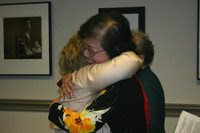
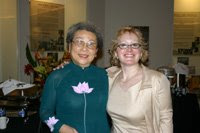 The Vietnam Center and Archive’s May 28th, 2008 opening ceremony of the Families of Vietnamese Political Prisoners Association (FVPPA) Collection, donated by the Vietnamese American Heritage Foundation (VAHF), was a great success. The Vietnam Center and Archive co-hosted the event, entitled “We Did Not Forget Those Left Behind,” with the VAHF. The ceremony marked the collection as fully processed and available to researchers. The Vietnam Center and Archive held the ceremony to raise awareness of the FVPPA collection and to thank those individuals and organizations who helped these Vietnamese refugees emigrate to the U.S.
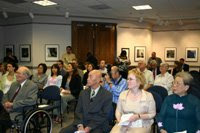 Speakers at the event included: Dr. James Reckner, Executive Director, Institute for Modern Conflict, Diplomacy, and Reconciliation; Ms. Nancy Bui, President, Vietnamese American Heritage Foundation; Ms. Khuc Minh Tho, Founder and President, Families of Vietnamese Political Prisoners Association; An Hoang Le, Humanitarian Operations Participant; Dr. Stephen F. Maxner, Director, the Vietnam Center and Archive; Mr. T. Kumar, Advocacy Director for Asia & Pacific, Amnesty International; Ms. Anna Mallett, Project Archivist, the Vietnam Center and Archive; Dr. William M. Marcy, Provost, Texas Tech University; and United Nations High Commissioner for Refugees (UNHCR) deputy regional representative Thomas Albrecht was scheduled to speak, but had to cancel his flight and attendance due to events in East Africa, Kenya.
Distinguished guests at the May 28th Opening Ceremony included
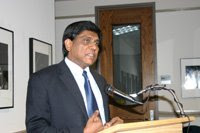 Khuc Minh Tho, T. Kumar of Amnesty International, Major General Dudley Faver, representatives of the Vietnamese American Heritage Foundation, and Texas Tech University Provost William M. Marcy.
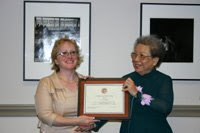
Awards were given from the VAHF to Dr. James Reckner, Dr. Stephen Maxner, Mary Saffell, and Ann Mallett. The Vietnam Center and Archive also presented an award to Ann Mallett.
 Letters of written for the May 28th Opening Ceremony by Senator John McCain, Senator Bob Dole, President George H. W. Bush, the International Committee of the Red Cross, and Robert L. Funseth (Senior Deputy Assistant Secretary of State and Acting Director of the Bureau for Refugee Programs) are posted on our website for researchers to read when they look the FVPPA collection. These letters, along with the FVPPA collection’s scope and content note, administrative history, finding aid, and names search database, may be viewed on the following webpage of the Vietnam Archive’s Virtual Archive: http://www.vietnam.ttu.edu/vietnamarchive/fvppa/index.htm
 -All photos are were taken by The Vietnam Center’s Victoria Lovelady
 -
Ways to Access Digitized Materials, Part III
 This is the conclusion of a three part series on ways to access the digitized materials of the Vietnam Archive without using the Virtual Vietnam Archive search page (see Part I and Part II).Other methods to access digital materials include our Teachers Resources Web, which, under the Subject Searches section, includes links to digital materials on a variety of subjects, including historical figures and equipment. These subject searches are setup for Primary, Secondary, and College level users.We also have a Resources by Topic section of our site that contains links to bibliographies on a variety of subjects related to Vietnam and the Vietnam War. Some of these bibliographies include links to subject searches on the topic, or oral histories or collection finding aids related to the subject. We are currently working on expanding the section of our site with new subject guides.Finally, for researchers interested in the conferences and symposia offered by the Vietnam Center, pages have been created providing links to the videos of each conference (when available). These links can be found on the Past Conferences, Symposia, and Events page.We are always striving to make our site as useful and user-friendly as possible. If you have any suggestions or requests, please feel free to email us at vawebmaster@ttu.edu, or use on online survey.
 -
Ways to Access Digitized Materials, Part II
Last week, I started a post on Ways to Access the Digitzed Materials of the Vietnam Archive. This is a continuation of that series.
The newest method we have added to our site is through our new RSS Feed (see earlier posting of June 11, 2008). This feed will allow users to view the previous day’s newly added records, or records that were updated with new information. A link to the RSS Feed can be found on our homepage.If you are interested in maps, there is a search page that exclusively searches our map collection. This page functions in much the same way as the Virtual Vietnam Archive search page (through which maps can also be accessed), but also includes additional search features such as latitude/longitude, country, and scaled. Links to gazetteers are provided to assist researchers in determining coordinates for towns or villages. There is also a “Navigate the Country” section that allows users to click through a map of North or South Vietnam to the province level, and see the individual 1:50000 AMS maps for that province. These maps are all linked together within the records as well, so users can navigate from map to map without returning to the search page. This linking can be found in the “More Information” section of each record.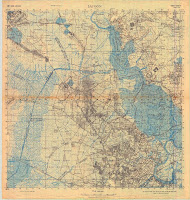
Look for conclusion of this series later this week.
-
Ways to Access Digitized Materials, Part I
 Did you know that there are a number of ways to access the digitized materials of the Vietnam Archive other than through the Virtual Vietnam Archive search page?
One way to access digital materials, or just to browse through the holdings of the Vietnam Archive, is through the Browse the Collections page. This section of our website contains alphabetical listings of all of the collections in the Vietnam Archive (arranged by last name for individuals, or first word for other collection types). Each browse page contains some basic information about the collection, including a Scope and Content note (when available) that provides an overview of what the collection contains. There is also a link to the full finding aid for the collection (a finding aid is basically an inventory of the collection). When materials from a particular collection have been digitized, links will be provided at the bottom of the finding aid to the digital materials. Please note, though, that due to system limitations, these links will only generate up to 250 records. To access the remainder of a collection, you will have to utilize the Virtual Archive search page. Additionally, the finding aid will have a link to an oral history if one has been conducted with the donor of the collection. A link to Browse the Collections can be found on our homepage.
Speaking of Oral Histories, there is also a Browse the Oral History Interviews page (link available on the homepage). This page is arranged alphabetically by last name of the interviewee, includes a description of each interview, and links to listen to the audio of the interview and/or a transcript, when available. In addition to the browse pages, there are also pages listing just interviews or collections added within the last few months.
I’ll post more ways to access digital materials here next week. (see Part II, Part III)
-
The Diaries of Dr. Dang Thuy Tram
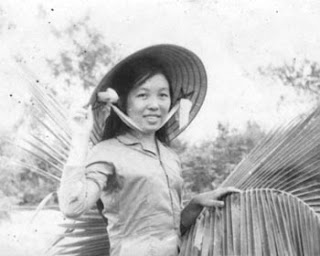 In 2005, the Vietnam Archive received the diaries of Dr. Dang Thuy Tram, a woman who served in a medical detachment for North Vietnamese Army. Dr. Tram was killed in action in 1970, but the diaries she kept for the last three years of her life were captured by U.S. soldiers. A U.S. Army Intelligence officer, Fred Whitehurst, was ordered to burn Dr. Tram’s diaries when they were found to contain no significant strategic information. Whitehurst’s astute translator advised him, “do not burn these, they already have fire in them.” He kept the diaries for thirty-five years, and eventually donated them to the Vietnam Archive. Dr. Tram’s family was found and contacted in Hanoi and given an electronic copy of the diaries. Tram became a national hero in Vietnam, and her diaries a bestseller. The Vietnam Archive was honored to host her mother and sisters in October 2005 in which the family was able to hold her diaries. Random House published an English translation last year titled Last Night I Dreamed of Peace: the Diaries of Dang Thuy Tram.
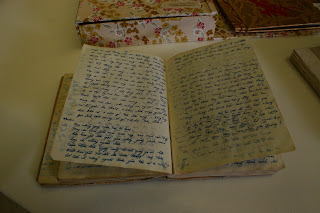 Dr. Tram made both of the diaries by hand, using supplies she had with her, including cardboard from boxes of medical supplies. Her writings detail the day to day danger and anxiety of war, and express Tram’s compassion for her patients and fellow soldiers, and her dedication to their cause. For more information about the diaries, and to view them online, please visit our website.


